
Grand Chute Previous Resident Sources
A Grand Chute address leaves several dated trails, but none is a complete list of everyone who lived there. Start with the source closest to the year in question. Current tax records identify the parcel and owner of record. Recorded deeds carry the same land backward by legal description. Directories and census schedules add the household layer, while permits and newspapers supply events that may explain a move, addition, sale, or death. The coverage is uneven, so a blank search result should prompt another channel instead of a claim that no record exists.
| Source | Years It Covers | Where Held | What It Shows |
|---|---|---|---|
| LandShark index and images | Current system; start not stated; 1979-1989 caution | Outagamie Register of Deeds | Grantor, grantee, instrument, date, tract, and image |
| Deed and tract books | Cataloged deeds 1825-1933; index 1839-1901 | Register of Deeds; FamilySearch and WHS referrals | Early transfers and land descriptions |
| Ascent rolls | Current and prior-year rolls | Outagamie Ascent and Open Data | Owner, parcel, mailing and situs addresses, values |
| Appleton-area directories | Verified items include 1874, 1884, 1887-88, 1901, 1915 | Appleton Public Library and digital partners | Dated names, roles, addresses, and street entries |
| Federal census | 1790-1950 now public under the 72-year rule | National Archives and library databases | Households and residence-area snapshots |
| Newspapers and obituary index | Microfilm to 1853; selected 1860-1972; 1999-present | Appleton Public Library and partners | Moves, deaths, sales, family, and probate leads |
| Building permits | Retained run not stated | Grand Chute Community Development request | Construction, owner, contractor, parcel, and dates |
For a recent question, use Ascent and then LandShark. For an early twentieth-century address, begin with the scanned directory and census year nearest the date. The Appleton Public Library can search its partial obituary index, inspect microfilm, or email a free article when a date is known. Town permit material has no public lookup in the researched sources, so ask Community Development by address, parcel, owner, record type, and date range.
Fix the Grand Chute Resident Parcel
The physical parcel is the stable starting point for previous residents. In the Outagamie Ascent search, enter either a parcel number, an address, or an owner name, never several methods at once. Parcel numbers omit spaces and dashes. For an address, enter the street number and name without a directional or suffix. Open the red parcel-number result and save the parcel ID, situs address, owner, mailing address, and full legal description.
Situs means the land's physical location. A mailing address is only where the tax notice goes. It may be outside Grand Chute, use an Appleton city line, or name a care-of recipient. Neither field proves who occupies the house. Values, credits, and a tax bill also describe the parcel, not a household roster.
The captured Ascent property-search screen shows the official starting interface.
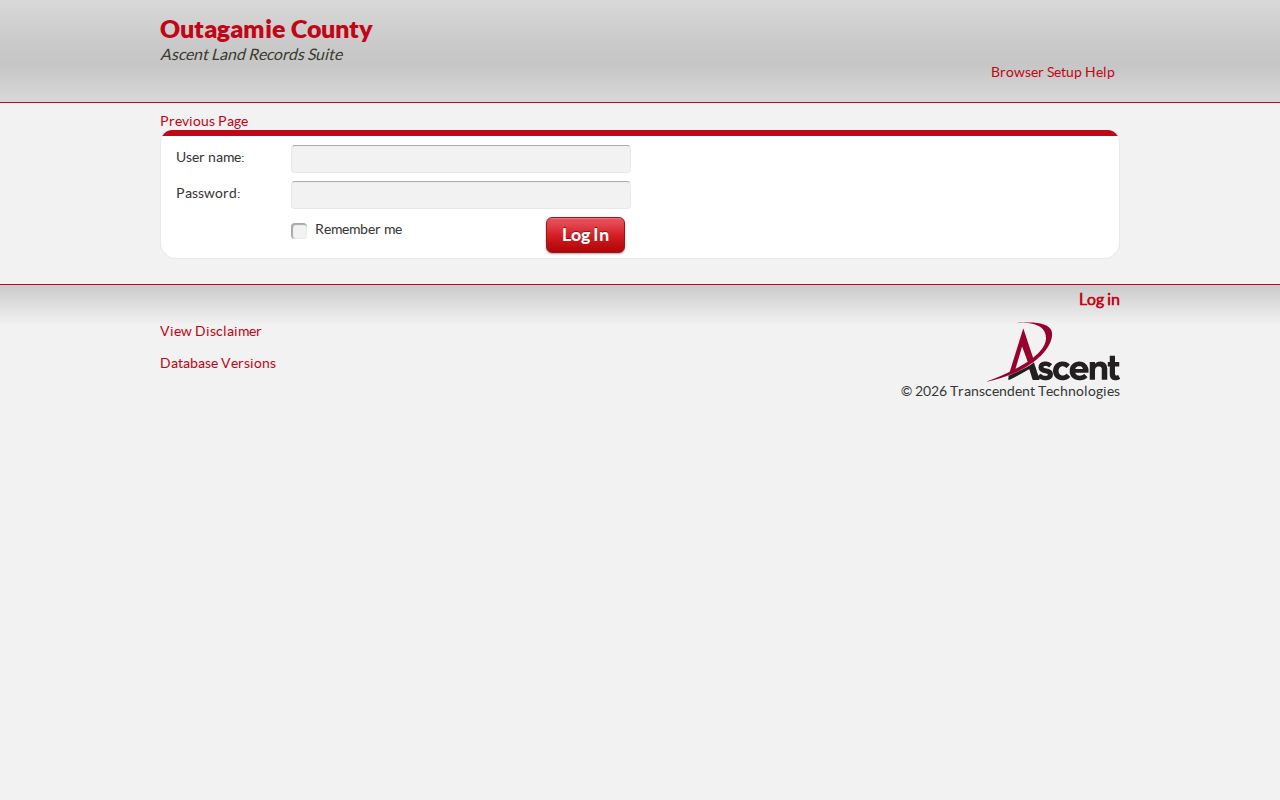
Its separate parcel, address, and owner routes help keep the first match tied to a specific tract.
Trace Grand Chute Residents Backward
The Outagamie deed chain follows the land from today's owner to earlier owners. In a deed, the grantor gives an interest and the grantee receives it. A chain of title is the connected series of transfers for the same land. Online index entries are leads. The recorded images and their matching legal descriptions supply the link.
- Copy the current owner, parcel ID, situs address, and legal description from Ascent.
- Search the current owner as grantee in Outagamie LandShark. Narrow by tract, date, and document type.
- Read the purchase deed. Record its grantor, grantee, dates, document number, volume and page, prior-instrument reference, and exact land description.
- Search that seller as an earlier grantee. Accept the link only when the tract or legal description agrees.
- Repeat. If the index fails, ask the Register of Deeds about ColorTract, tract books, older indexes, or copies in person or by mail.
- Grantor and grantee
- The party transferring an interest and the party receiving it.
- Chain of title
- The sequence of instruments that connects ownership of the same land over time.
- Legal description
- The recorded identity of land, often a lot, block, subdivision, certified survey map, or measured boundary.
- Criss-cross directory
- An address-keyed directory used to move from a street number to a dated occupant entry.
The captured LandShark page is the county's recorded-document gateway.
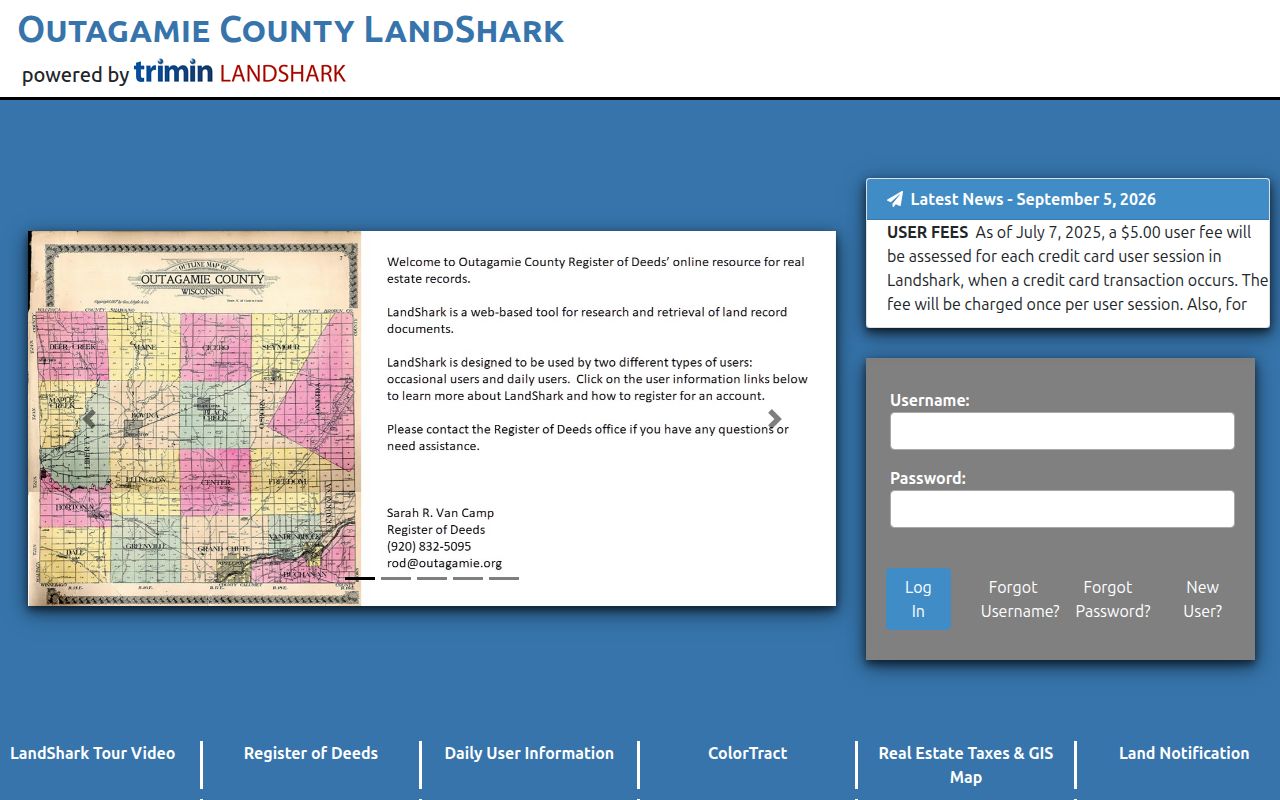
Use its index to locate an instrument, then read the image or request a copy rather than treating the result line as a full title search.
Grand Chute Resident Deed Checks
LandShark's own disclaimer says its index is not a title search. It also flags the 1979-1989 back-index as not yet confirmed for accuracy and warns that older images may be hard to read. That caveat matters most when tracing previous residents, because one missed deed can break the apparent chain. A failed name search during that span is not evidence that a transfer never happened.
Try the seller and buyer in both roles, search the tract or legal description, and compare any document references printed on the deed. Then use ColorTract or the office's tract books as a second route. The Register of Deeds offers index access online and copies through the office, mail, or online service, but staff do not perform the chain research for a requester. Current LandShark notices list paid image and copy access, a $5 credit-card user fee when a transaction occurs, and a 5% card charge for escrow replenishment.
Note: A missing 1979-1989 index result calls for a tract search, not a conclusion about who owned or lived at the address.
Match Grand Chute Resident Records
A modern street number can disappear as the research moves backward. A subdivision may have split a parent tract, a certified survey map may have redrawn lots, or an older deed may use a quarter-section or metes-and-bounds description. Follow the land terms on the instrument. Lot and block identify a platted parcel; a certified survey map, often shortened to CSM, records a surveyed division; metes and bounds describes lines and distances.
The Grand Chute GIS and property office can provide hard-copy plats, certified survey maps, streets, utility plans, and as-built drawings at Town Hall. County GIS adds parcel geometry, PLSS sections, historic aerials, zoning, and floodplain layers. If a deed refers to a parent tract, compare the recorded plat and the mapped parcel rather than forcing the old text onto today's address.
The captured Town GIS page identifies the local map-request channel.
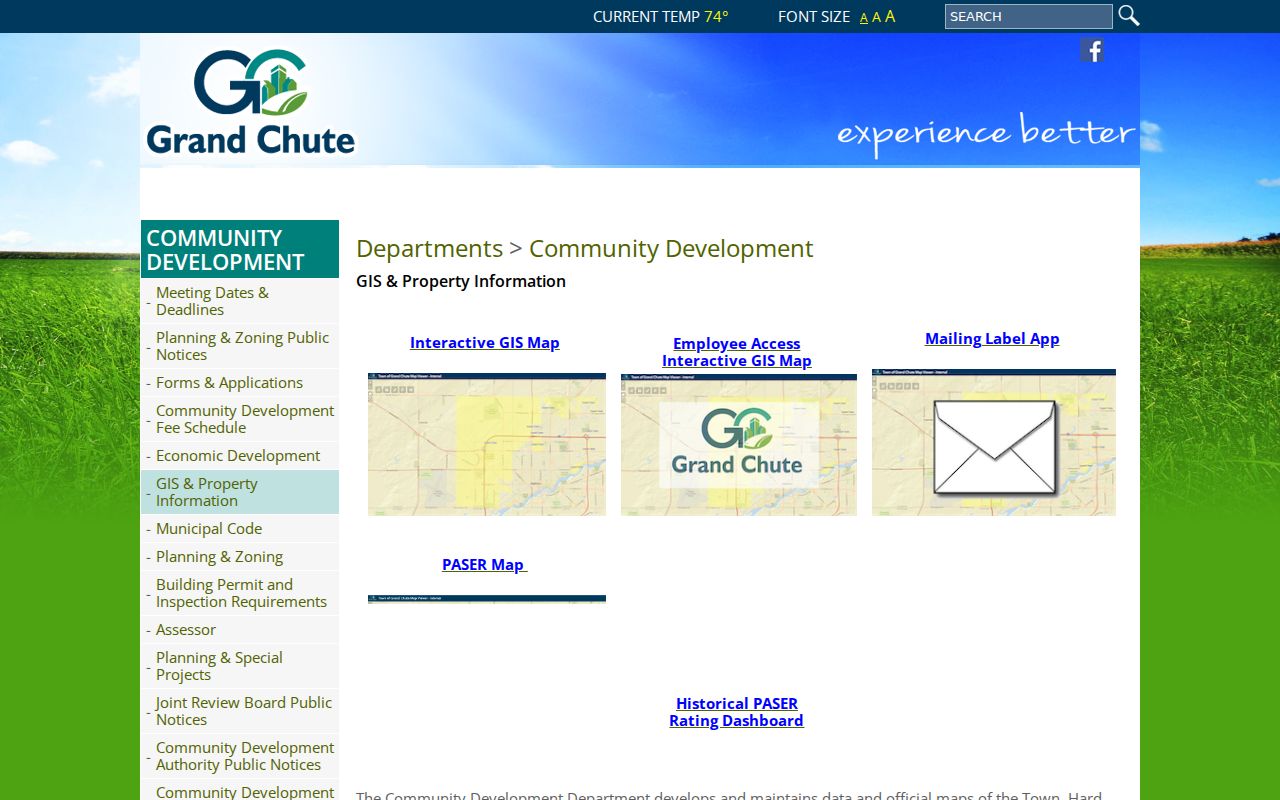
This town source is especially useful because Grand Chute assigns its own addresses while Outagamie County maintains the parcel system.
Grand Chute Resident Address Snapshot
The 1901 Bunn & Ferry directory is a rare bridge for previous residents. Its scanned volume explicitly covers Grand Chute and contains both alphabetical name pages and an Appleton street section. Search a surname first, then inspect the street and number. An entry may identify a spouse in parentheses, an occupation, an employer, a residence, a rooming address, or widow notation. A business, institution, or rooming place can share an address, so the entry is a dated clue rather than proof of one household.
The Appleton Memory Project's 1901 directory contains 1,152 scanned pages and a generated transcript.
The scan should control when its OCR transcript mangles a name, street, or abbreviation. The full collection context belongs on the Grand Chute city directories page.
Pair Grand Chute Directory Years
Directories can place a name near a date; a federal census can show a household snapshot. They are not interchangeable. Census schedules become public under a 72-year rule, making 1950 the latest open federal census at present. A directory issued before a census may show an arrival, while one issued after it may show a move. Gaps between Grand Chute directory years mean continuity cannot be assumed.
- Record the exact directory year, spelling, initials, street number, and any spouse or role notation.
- Check both name and street sections in that volume. Read adjacent lines and the abbreviation key.
- Find the nearest open census schedule and match age, family, occupation, and place, not the surname alone.
- Compare the next verified directory item. Account for Appleton postal wording and Grand Chute's legal municipality.
- Test the result against a deed, tax roll, obituary, or probate record with an independent date.
A tidy worksheet should separate source date, printed address, person, relationship note, and confidence. That stops an OCR hit or same-name census result from becoming an unsupported claim about past residents.
Close Grand Chute Resident Trails
Appleton Public Library's local-history staff offer the most practical fallback when the address trail leaves the deed books. The Jabas Appleton Collection holds directories, plat maps, Sanborn maps, yearbooks, photographs, and local-history books. Newspaper microfilm reaches back to 1853. Selected Post-Crescent material runs from 1860-1972 through linked digital collections, while ProQuest covers 1999 to the present. The obituary index is partial, but staff can locate microfilm or email a free article when the newspaper date is known.
An obituary may name relatives, a former address, cemetery, or funeral home. A public probate file may identify heirs or a fiduciary. Neither creates a complete residence history. Request probate material from the Outagamie Register in Probate and respect confidential guardianship or commitment records. For permits, send the town a focused request by address, parcel, owner, permit type, and date range under Wisconsin Public Records Law.
Sanborn maps may show a building footprint, number, construction, or use, but the inspected sources did not verify an exact Grand Chute run. Likewise, no official local renumbering year was found. Ask the library and Town GIS to compare street sections, plats, maps, and legal descriptions before claiming an old and new number are the same place.
Watch New Grand Chute Deeds
House-history work can also watch the present. Outagamie County's free Land Notification service sends an email or text when a newly recorded document matches a subscribed personal or business name. A valid email and phone are required, and the subscription can be canceled. The alert does not decide whether a document is valid or tied to the target parcel. It is a prompt to inspect the official record.
Use the service after documenting the current chain, especially when avoiding a deed-copy solicitation or monitoring an estate matter. A mailed offer that quotes a parcel number is not an official record. Compare it with the Register of Deeds 101 notice and the county's published copy route. Keep the parcel ID and instrument number handy, but do not send identity papers to an unknown sender.
Limits on Grand Chute Previous Residents
Owners are not the same as occupants. A tax roll may name a company or absentee owner. A directory may omit a family, list a rooming place, or carry an entry past a move. The census records a household only on its enumeration date. Permits identify a project and parties to it, not everyone living inside. Strong research states what each record shows and leaves unproven residents unnamed.
Grand Chute records can also hide information by law. Wisconsin Safe at Home supplies a substitute legal address for qualified people facing safety risks. Confidential-elector and protected-voter rules can keep actual addresses out of released voter data. Court, vital, and probate files have separate limits. No search method should be used to defeat those protections.
Lawful use. Research previous residents for house history, genealogy, heirs, and personal curiosity. Never use an address trail to watch, harass, intimidate, or harm a living person.